Blog › Skin Care
Skin CareMelasma Treatment in Delhi: Causes, Options, Cost
You look in the mirror and spot brown patches on your cheeks. “Is it a tan?” you wonder. You scrub harder, but the marks stay. Many people in Delhi face this exact problem, and its name is melasma.
Don’t worry. You can treat it, and you don’t need to guess. In this blog, we explain what causes melasma, how strong sun exposure can make it worse, and which options really work. We also share the cost of melasma treatment in Delhi, so you can plan your budget with confidence.
By the end, you will know what to ask your doctor and what to expect next. The practical information will help you speak confidently with a skin specialist and make an informed decision about your care.
What Is Melasma? Understanding Causes and Symptoms
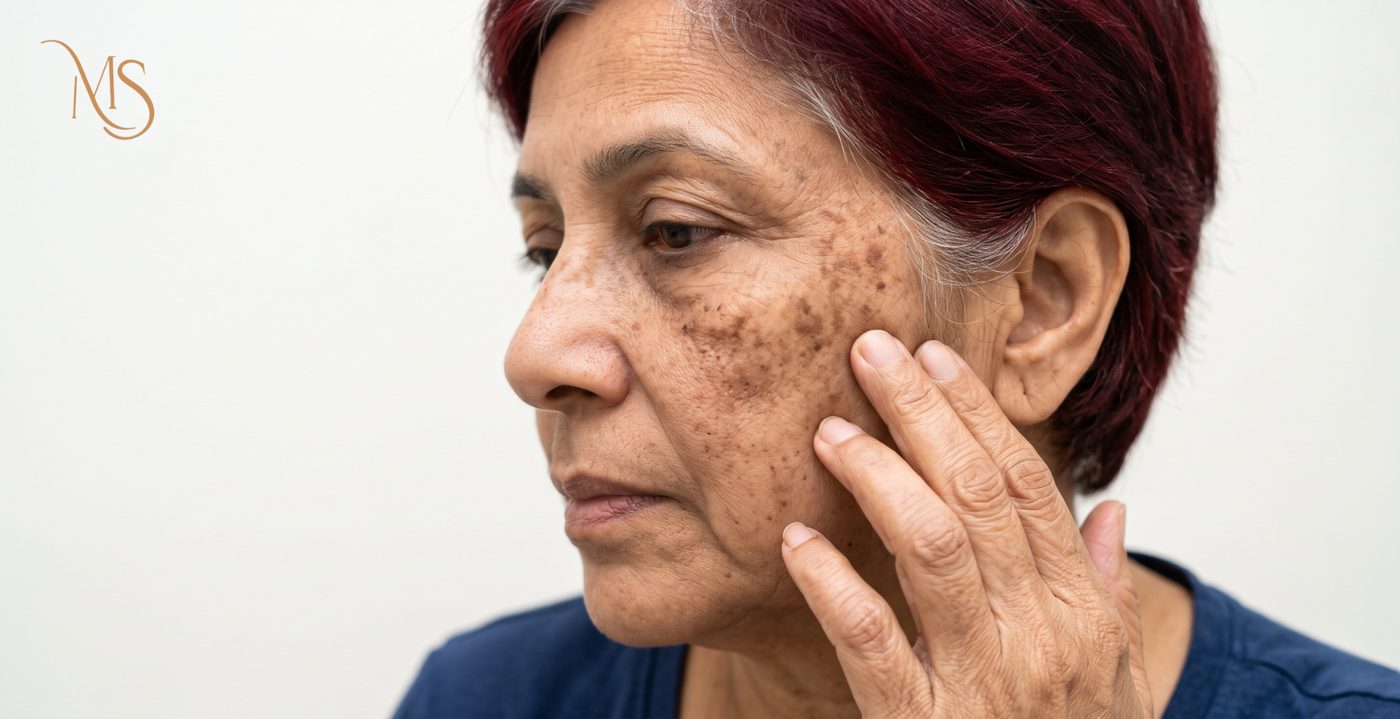
Melasma is a skin condition that causes brown or grey-brown patches on your face. You usually see them on the cheeks, forehead, nose, and upper lip. The patches are flat, so you can’t feel them. They just show up as darker skin. Melasma is not painful, and it is not harmful. It does not spread from person to person either. But many people feel upset about how it looks, and that is completely normal.
Doctors don’t point to one single reason. Instead, several triggers work together:
- Sun exposure: Sunlight tells your skin to make more pigment, the natural colour in your skin. This is the most common trigger.
- Hormonal changes: Pregnancy, birth control pills, and hormone therapy can bring melasma on. This is why it is more common in women.
- Family history: If your mother or sister has melasma, you are more likely to get it.
- Darker skin tones: People with brown skin, including many Indians, get melasma more often.
- Heat and some skincare products: Strong heat or harsh products can irritate the skin and make patches darker in some people.
Look for these symptoms:
- Brown, tan, or grey-brown patches with uneven edges
- Patches on both sides of the face, usually in a matching pattern
- Patches that look darker after time in the sun
- No itching, pain, or burning
Melasma Treatment in Delhi: Available Options
There is no single best treatment for melasma. The right choice depends on your skin type, how deep the pigment is, and how long you have had it. A dermatologist will look at your skin and suggest a plan that suits you. Here is a quick look at the main options.
| Treatment | How it works | Best for | Sessions |
|---|---|---|---|
| Topical creams | Slow down pigment production | Mild to moderate melasma | Daily use for weeks to months |
| Chemical peels | Remove the top layer of dull, dark skin | Surface-level patches | Usually 3 to 6 sessions |
| Pico laser | Breaks pigment into tiny pieces with very short light pulses | Stubborn patches | Usually several sessions |
| Other lasers | Target pigment with different types of light | Selected cases, chosen by the doctor | Varies |
1. Topical Creams and Prescription Treatments
Most doctors start here. Creams are simple, affordable, and you can use them at home. Your doctor may prescribe ingredients such as hydroquinone, tranexamic acid, azelaic acid, kojic acid, or vitamin C. Some creams combine two or three of these.
Here is what you need to know. Creams work slowly. You may need to wait several weeks before you see a change. Use them exactly as your doctor says, because some ingredients can irritate the skin if you overuse them. Always wear sunscreen as well, or the patches may return.
2. Chemical Peels for Melasma
In a chemical peel, the doctor applies a mild acid to your skin. The acid gently lifts off the top layer, and fresh, lighter skin appears underneath. For melasma, doctors usually choose light peels, such as glycolic or salicylic acid, because strong peels can irritate brown skin and darken the patches.
Your skin may feel dry or look slightly red for a few days. Most people need a series of sessions spaced a few weeks apart.
3. Pico Laser Treatment
Pico laser is a newer option. It sends out extremely short pulses of light that break pigment into tiny particles, and your body then clears them away naturally. Because the pulses are so quick, they create less heat than older lasers. That matters for melasma, since heat can sometimes make patches darker.
Many Delhi clinics now offer pico laser. You will usually need more than one session. Ask your doctor how many to expect, and what results are realistic for your skin.
4. Other Laser Treatments for Pigmentation
Some clinics also use Q-switched Nd:YAG lasers, often in a gentle “laser toning” setting, along with other light-based pigmentation treatments. These work in a similar way, by targeting the pigment in your skin.
But lasers are not right for everyone. If the settings are too strong, they can cause rebound darkening in melasma. So choose a qualified dermatologist, and ask for a patch test if possible.
Melasma Treatment in Delhi: Cost Breakdown
Cost of Different Melasma Treatments
| Treatment | Typical cost per session | What to know |
|---|---|---|
| Topical creams | Usually the most budget-friendly option | Creams cost less but take longer to show results |
| Chemical peels | ₹2,000 to ₹6,500 per session | Full treatment packages typically run about ₹8,000 to ₹18,000 |
| Laser for pigmentation | ₹4,000 to ₹10,000 per session | Laser courses usually need about 4 to 6 sessions |
| Q-switched laser | ₹5,000 to ₹10,000 across Delhi NCR | Often used in gentle “laser toning” settings |
| Advanced lasers (like pico) | Usually higher than standard lasers | Pico laser generally costs more than standard Q-switched lasers |
| Exosome therapy | ₹30,000 to ₹50,000 per session | One of the costliest options |
Factors That Affect Treatment Cost
- Melasma laser starting price: Standard melasma laser sessions in Delhi typically start around ₹3,780 per session, with the final price set after a consultation.
- Pigmentation overall: Average costs across Delhi clinics range from ₹3,000 to ₹15,000 per session, depending on how deep the pigment is.
- Laser for dark spots: Targeted laser treatments for stubborn dark spots and pigmentation generally fall between ₹5,000 and ₹18,000 per session.
- Peels in general: Chemical peels often require 6 to 8 sessions for stubborn melasma, which increases the total treatment cost.
Best Clinic in Delhi for Stubborn Pigmentation and Dark Spots
You have tried creams. You have tried home remedies. Yet the dark spots stay? Then it may be time to see a specialist. The best clinic for you is not the one with the biggest ad. It is the one that studies your skin, explains your options in plain words and gives you a plan that fits your needs.
What to Look for When Choosing a Dermatologist
- Proper qualifications: Choose a board-certified dermatologist with a medical degree (MD or DNB in dermatology). Ask for their registration details if you cannot find them.
- Experience with pigmentation: Melasma treatment is tricky, and it needs a doctor who treats it often. Ask, “How many melasma patients do you see?”
- Experience with brown skin: Indian skin reacts differently to lasers and peels. Your doctor should know how to avoid rebound darkening.
- A real skin check: The doctor should examine your skin and ask about your history, medicines, and sun habits before suggesting anything.
- Clear costs: The clinic should explain the price per session, the number of sessions and any extra charges before you begin.
- A clean, safe clinic: Look for sterile equipment, trained staff, and approved machines.
- Follow-up care: Genuine clinics check your progress and adjust your plan along the way.
Why Doctor Consultation Matters for Melasma Treatment
- It confirms the problem: Dark spots can come from melasma, sun damage, acne marks, or other causes. Each one needs a different treatment.
- It finds your triggers: The doctor can spot what makes your pigmentation worse, such as sun, hormones, or certain products.
- It builds a plan for you: Your skin type, age, and budget all shape the right mix of creams, peels, or pico laser.
- It keeps you safe: A doctor knows which treatments suit your skin and which ones to avoid.
- It sets honest expectations: You will know how long treatment takes and what results are realistic.
Melasma vs Other Types of Skin Pigmentation
Not every dark patch on your face is melasma. Sun damage, old pimples, and even a rash can leave marks behind. They may look alike, but each one has a different cause and needs a different plan. Here is a quick way to tell them apart.
| Feature | Melasma | Sunspots | Post-inflammatory hyperpigmentation (PIH) |
|---|---|---|---|
| Main cause | Hormones, sun, family history | Years of sun exposure | Skin injury or inflammation |
| Colour | Brown or grey-brown | Light to dark brown | Pink, red, brown, or dark brown |
| Shape | Large, uneven patches | Small, round spots | Matches the shape of the earlier injury |
| Where it appears | Cheeks, forehead, nose, upper lip | Face, hands, shoulders | Anywhere skin was hurt |
| Sides of the face | Usually matches on both sides | Random | Random |
| Tends to return | Yes, often | Yes, with more sun | Less likely once the cause is gone |
Melasma Treatment at MS Skin & Hair Clinic
Overview
MS Skin & Hair Clinic treats melasma and other stubborn pigmentation at its Green Park, Delhi branch, and also in Faridabad. Every plan starts with a skin check. The doctor finds out how deep your melasma goes then builds a plan around your skin type and lifestyle. Most plans pair a laser or peel with a home skincare routine. Daily SPF 50+ sunscreen is a must because the sun is the main trigger. The clinic’s protocols are designed to be safe for Indian skin tones.
Meet the Doctor
Dr. Megha Sharma leads this clinic.
- Qualification: MD in Dermatology
- Background: Former dermatologist at AIIMS
- Experience: 15+ years
- Approach: She checks each patient personally and designs the plan herself
Treatments Offered for Melasma
| Treatment | What to expect |
|---|---|
| Pico laser | Usually 6 to 10 sessions |
| Q-switch laser | Usually 6 to 10 sessions |
| Cosmelan peel | One clinic session, then home care for 6 to 12 months |
| Prescription creams | Used at home alongside clinic treatments |
Conclusion
Melasma can feel stubborn, but you are not stuck with it. Now you know what causes it, how it differs from sunspots and other dark marks, and which treatments doctors use. You also know what to expect on cost. The key points are simple. Get a proper skin check first. Choose a qualified dermatologist who has experience with brown skin. Wear sunscreen every day, because sun is the biggest trigger.
Melasma can return so think of treatment as a long game. Patience and follow-up care matter as much as the treatment itself. Book a consultation, ask your questions and start with a plan built for your skin.
Ready to Meet Dr. Megha Sharma?
Based in Green Park, Delhi. Book a consultation for melasma, dark spots or uneven skin tone.
Book ConsultationFrequently Asked Questions
1. Is melasma harmful?
No. Melasma is not painful, and it does not harm your health. It does not spread from person to person either. Most people seek treatment because they don’t like how it looks, and that is a perfectly good reason.
2. Why does melasma come back after treatment?
Triggers such as sun exposure and hormonal changes stay in your life. If you skip sunscreen, the pigment can return. That is why doctors suggest follow-up visits and a daily skincare routine.
3. Is melasma treatment safe for Indian skin?
It can be, when a skilled dermatologist plans it. Brown skin can darken if a peel or laser is too strong. So choose a doctor who knows how to treat Indian skin, and ask about a patch test.
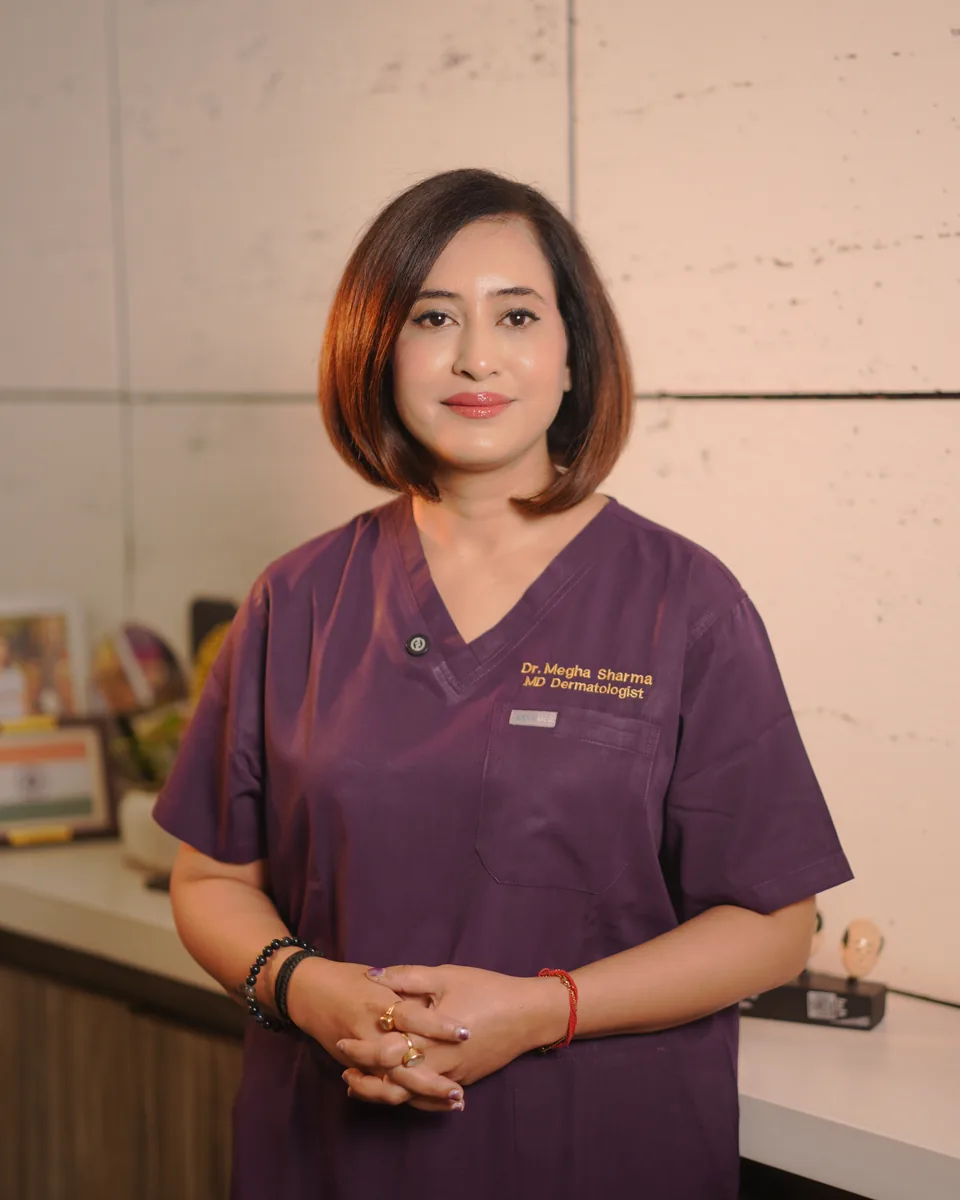
Meet Dr. Megha Sharma
Dr. Megha Sharma
MBBS · MD Dermatology · MISD · MIADVL · MACS · Ex- Dermatologist AIIMS
Dr. Megha Sharma is one of Delhi's most experienced and trusted dermatologists, with over 15 years of expertise spanning medical dermatology, aesthetic medicine, laser treatments, and hair transplant surgery.
A former Dermatologist at AIIMS — India's most prestigious medical institution — Dr. Megha brings unparalleled clinical depth and academic rigour to every patient interaction. She has performed thousands of skin, hair, and aesthetic procedures over her career, with a consistent focus on safety, natural results, and patient-centred care.
Professional Memberships
- IADVL — Indian Association of Dermatology, Venereology & Leprosy
- ISD — International Society of Dermatology
- ACSI — Association of Cutaneous Surgeons of India
- Joint Secretary, Dermatology Society of Faridabad (DSF)